
Socrates drank a cup of poison hemlock and calmly discussed philosophy as it killed him. That poison became one of homeopathy’s most fascinating remedies. Meet Conium, the remedy for hardness, slowness, and stubborn vertigo. It sounds dramatic. It is dramatic. Yet in homeopathic potency, this same plant helps people heal instead of harming them. Curious how a deadly poison turns into gentle medicine? Keep reading.
What Is Conium?
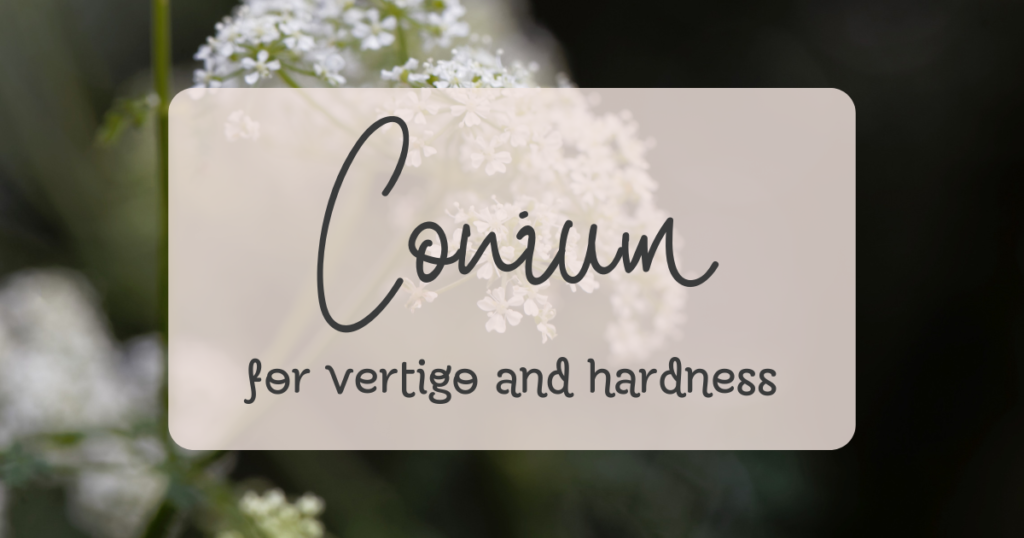
Conium maculatum is poison hemlock, a plant in the carrot family. Homeopaths prepare it from the fresh flowering plant. Hahnemann proved this remedy and found it caused rigidity, hardening, and dulled senses. Clarke’s Dictionary of Practical Materia Medica confirms this same primary action of hardening and dimming. Those two themes define Conium’s picture. The remedy targets glands, nerves, and the mind. It suits people who feel stuck, slow, or worn down over time.
Conium Keynotes
Conium’s keynotes make it easy to recognize once you know them.
- Vertigo that worsens on turning the head, especially sideways.
- Vertigo that strikes on lying down or turning over in bed.
- Stony, hard glands, especially in the breasts, testes, or prostate.
- Hard lumps that form after a bruise or old injury.
- Slow, gradual weakness that builds over years, not days.
- Ascending weakness that climbs upward from the feet.
- Dimmed senses, forgetfulness, and mental dullness in aging patients.
- Complaints tied to suppressed sexual desire or long celibacy.
- Photophobia, where bright light feels harsh and dazzling.
- Interrupted urination that stops and starts without warning.
The Folklore And History Behind Conium
Poison hemlock carries a heavy reputation. Ancient Greeks used it as a method of execution. Philosophers even discussed its effects while dying from it. Plato described Socrates growing numb from the feet upward until his heart stopped. Historical accounts of his execution confirm this same paralysis pattern. That image still defines Conium’s paralysis picture today.
Hemlock also carried dark folklore. Ancient cultures linked it to the underworld and to Hecate, goddess of witchcraft. This connection appears in historical accounts of hemlock’s origins. Growing along roadsides, it resembled wild parsley or carrot. That resemblance caused many accidental deaths throughout history.
Samuel Hahnemann later proved Conium and brought it into homeopathic practice. He noticed its power over glands, nerves, and the aging body. Homeopaths since then have used it for hardness, vertigo, and slow decline. What once ended a life now helps restore one, in the right dose and form.
Why Dilution Matters
Conium starts as a poisonous plant, and that fact worries some parents.
Here is the reassuring part. Homeopaths dilute and succuss Conium many times before it becomes a remedy. This process removes the toxic, material dose completely. What remains is an energetic imprint, not a poisonous substance.
Even highly toxic plants and minerals become safe once properly diluted. That is true for Conium, Arsenicum, Belladonna, and many other remedies. Properly prepared Conium is safe to use. Safety comes from the method, not from the raw ingredient.
Always buy remedies from reputable homeopathic pharmacies. Follow dosage guidance from a trained practitioner, especially for children.
How To Use Conium Thoughtfully
Do not reach for Conium at the first sign of dizziness.
Instead, watch for the full pattern over time. Notice if vertigo worsens on turning the head or lying down. Check for hard, painless lumps that formed after an old injury. Pay attention to slow, creeping weakness that builds across months or years.
Try these practical steps:
- Track vertigo triggers and note what makes it better or worse.
- Watch for hardness in glands after any bruise or blow.
- Note mood changes like apathy, indifference, or mental dullness.
- Seek urgent medical care for sudden paralysis or breathing trouble.
- Consult a professional homeopath for chronic vertigo or glandular hardness.
A skilled homeopath matches the whole picture. One symptom alone does not decide the remedy. Sometimes Conium fits perfectly. Sometimes another remedy suits the case better.
The Bottom Line
Conium carries a dramatic history, from ancient poison to modern remedy. Its keynotes, stony hardness, vertigo on turning, and slow decline, are unmistakable once learned.
Moms exploring homeopathy can appreciate Conium’s history and its gentle, diluted safety. Homeopaths can appreciate its precision for chronic, hard-to-treat cases.
If vertigo, hardness, or slow decline sound familiar, do not guess alone. Seek out a professional homeopath. Chronic conditions deserve careful, individualized care, and the right remedy can bring real relief.
Leave a Reply