
When illness hits hard, Baptisia often earns attention. This remedy picture feels sudden, heavy, and deeply exhausting. Homeopaths recognize it in intense acute cases. Moms often notice a child who seems unusually dull, weak, and disconnected. This one is often overlooked, but deserves a place in your remedy kit.
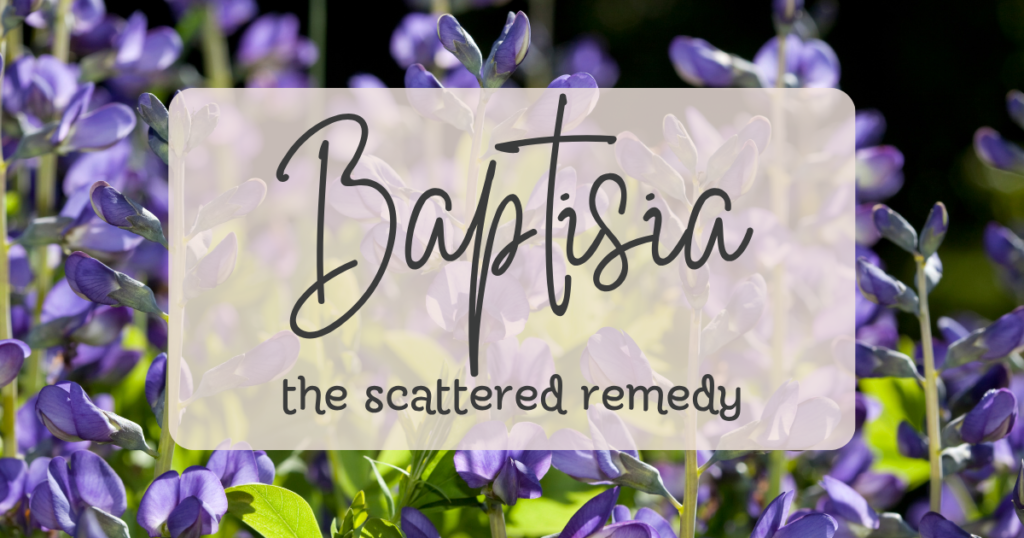
Meet Baptisia Tinctoria
Baptisia tinctoria grows across eastern and central North America. People know it as wild indigo, yellow false indigo, horsefly weed, and rattleweed. Its name comes from the Greek word bapto, meaning to dye or color. Early settlers used its roots for dye, although it never replaced true indigo.
Folklore And History
Indigenous peoples valued wild indigo long before modern herbal traditions adopted it. Historical accounts describe uses for wounds, respiratory illness, and washes. Some communities used rattling seed pods as children’s toys. That practice gave Baptisia one of its folk names, rattleweed. The plant also earned the name horsefly weed. People reportedly tied it to horse harnesses to discourage horseflies.
During the nineteenth century, physicians used Baptisia during severe infectious illnesses. Historical records associate the plant with typhoid-era practice and other serious conditions.
Baptisia Keynotes
Think of Baptisia when an acute illness creates profound weakness and a toxic-looking overall picture.
- Sudden onset after exposure to illness, especially with flu-like symptoms
- Heavy fatigue, with a desire to lie still and sleep
- Confusion, dullness, and difficulty gathering thoughts
- A sensation that the body feels scattered or separated into parts
- Restlessness, with a need to shift position despite exhaustion
- Offensive breath, sweat, stool, or discharges
- Dry, sore throat with dark redness, swelling, or putrid odor
- Tongue that looks coated, dry, dark, cracked, or brown through the center
- Fever with aching, soreness, and a bruised feeling throughout the body
- Stupor, muttering, and difficulty answering simple questions
The Famous “Scattered” Feeling
Baptisia has a striking mental keynote. The person may feel that their body will not stay together. They may imagine their limbs lie in different places. They may toss around trying to gather themselves. This symptom can sound unusual, yet it remains a classic Baptisia clue.
Observe the whole person. Note energy, temperature, thirst, sleep, mood, stool, and throat symptoms. Then share those details with your homeopath.
Baptisia For Families
Baptisia may be worth considering when your child looks unusually wiped out during an acute illness. The child may sleep heavily, seem mentally foggy, and resist conversation. Homeopathy is wonderful for acute illnesses such as the flu.
A Note About Safety
The crude Baptisia plant contains active compounds and should not be treated like a homeopathic remedy. Herbal preparations and homeopathic preparations differ greatly. Homeopathic remedies undergo repeated dilution. Many higher potencies contain little or no measurable starting material.
Ask a qualified homeopath with questions.
When To Call A Homeopath
Call a professional homeopath when the case feels complicated. This includes repeated infections, long-standing fatigue, behavioral changes, chronic digestive concerns, or symptoms that return after brief improvement.
A skilled homeopath looks beyond a single symptom. They assess the full pattern, your child’s constitution, triggers, and how they respond over time.
Baptisia can be an excellent acute remedy picture.
I wanted to let you know that I’m a participant in the Amazon affiliate program, and some of the links in this post are affiliate links. That means I might earn a small commission from Amazon if you click them and buy something, but it doesn’t cost you anything extra! It’s just a way to help support my site and keep the lights on.
Leave a Reply